Amateur Radio
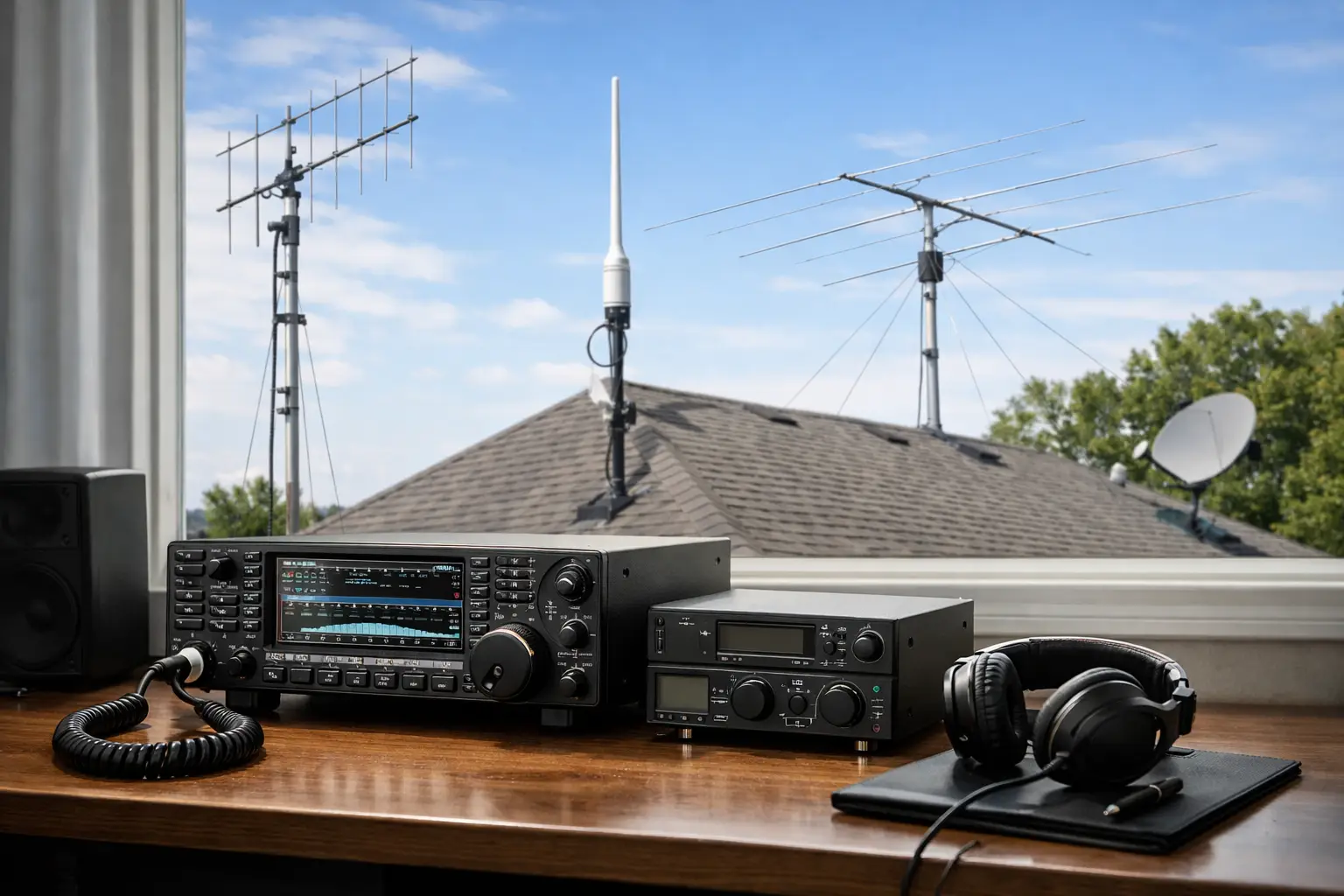 Amateur — “ham” — radio is a licensed service for experimentation and communication across an enormous range of bands and modes. It’s where you go when you want to build, tinker, and reach further than any consumer radio allows.
Yes, it takes a test — but the entry-level Technician exam is very approachable: 35 multiple-choice questions drawn from a published pool, and most people pass after just 10–20 hours of study with free tools. No Morse code required. Lifted from RFLab.io: Ham Radio
Operating
As a licensed operator, you are assigned a call sign. You use that to identify yourself while talking or keying on air. The two most common ways of communication are Phone (voice) and (optionally) CW (Continuous Wave/Morse Code). An Additional method is via digital (dat).
Getting a License
To get a license and a call sign, you will need to pass the Technician exam. Additional exams that you can take are the General and the amateur Extra. Each grants you access to slices of the radio spectrum (Bands). Technician grants you VHF, UHF, and a slice of HF. General gives you most of the HF spectrum, amateur Extra gives you the rest. Exams are regularly proctored in the area. Contact one of us for more information and where to start/go next.
Study guides are available online or in the Google Play or Apple App store. One of our of favorites is KB6NU’s No-Nonsense Study Guide
As an incentive, if you are a club member that is not yet licensed, you can receive a free handheld radio upon passing your license (Technician) exam and getting your call sign.
Hardware
You can set up a base station transceiver and an antenna - also if necessary a tuner and amplifier. There are a wide variety of off-the-shelf stations and antenna with connection cables available. You can also make your own antenna. strategically mount and tune the antenna to connect with repeaters and optimum contact finding. A TV tower is ideal, but not everyone has one nowadays, so mounting to a roof or a supported pole are good alternatives. Handheled radios (k.k.a “handie talkies”) and Mobile setups for a car or for remote setups are also available. Take care to protect your equipment from weather. Our club members are available to help out with installing your equipment
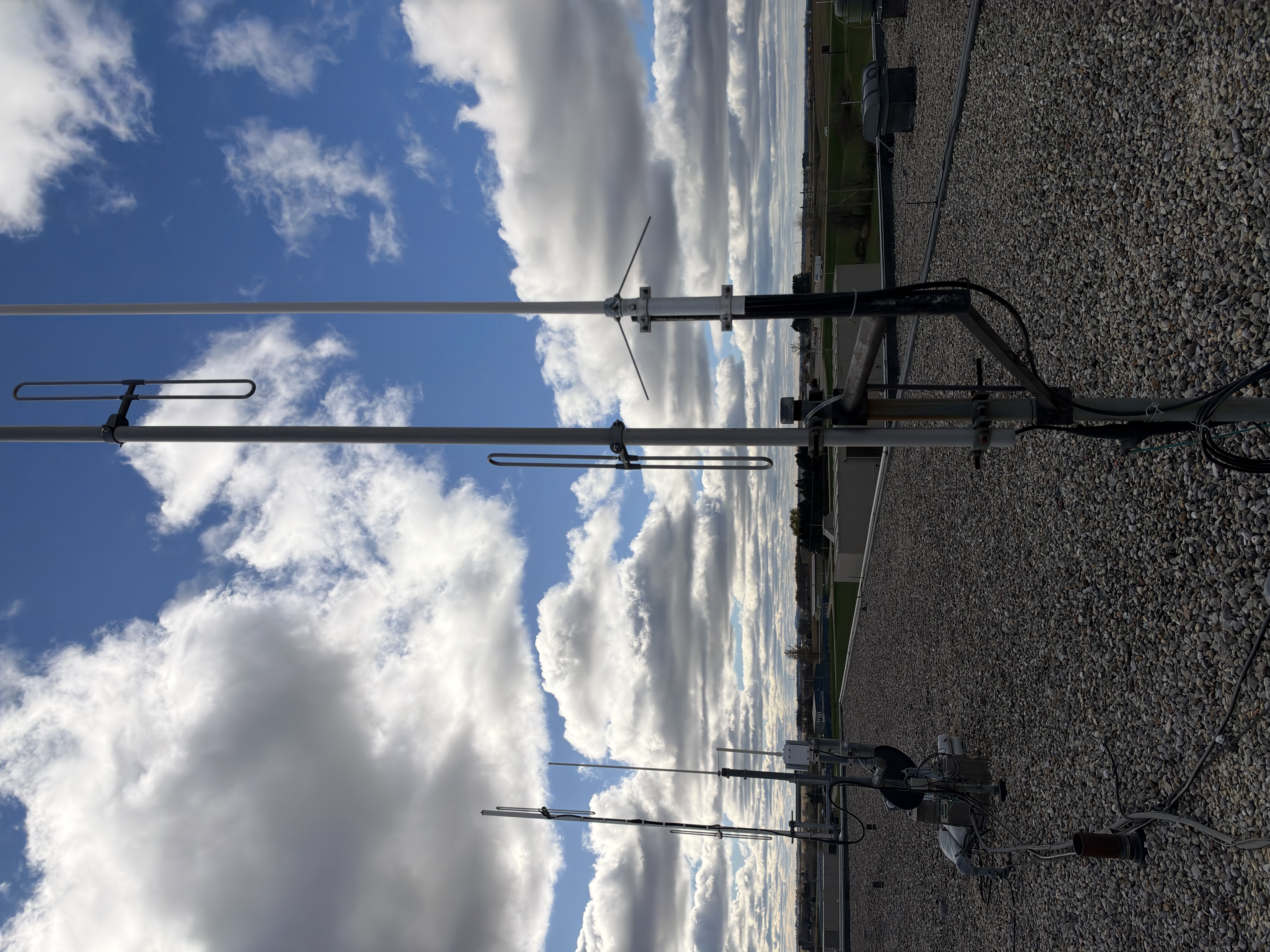
Beetown Repeater (N0WLU)
The club sponsors and operates the Beetown, WI 2-meter band (VHF) to support local conversation over the air as well as various nets.
repeater connection tuning:
| Callsign and Use | Frequency | Offset | PL Tone | Location |
|---|---|---|---|---|
| N0WLU (2-meter relay repeater) | 146.895 MHz | -0.6 MHz | 114.8 Hz | Beetown |
Hospital Repeater (KC9KQ)
The Club also sponsors and operates the Southwest Health Hospital 70 cm band (UHF) repeater. This repeater serves as a low-power connection to the Beetown repeater for handheld radios (handie talkies) around southern Grant and western Lafayette County WI which cannot transmit the power needed to connect to Beetown directly.
| Callsign and Use | Frequency | Offset | PL Tone | Location |
|---|---|---|---|---|
| KC9KQ (70cm low power for handheld transmission) | 444.325 MHz | 5.0 MHz | 131.8 Hz | Plattville |
repeater connection tuning 444.325 MHz, Offset - 5.0 MHz, PL Tone 131.8 Hz
Remote Ham Radio
The service provides various stations to use on a “pay-as you go” basis, providing antenna arrays, amplifiers up to 1500W, SSB, CW and FT8 modes and integrated logging synchronized to LoTW and Club Log. A good service for on-the-go memebers and those who are unable to install antennas due to restrictions imposed by HOAs or rental owners.
ARES/RACES
Short for “Amateur Radio Emergency Services / Radio Amateur Civil Emergency Service. This is a program supported by local organizations and clubs and hosted on area repeaters. HVARC member participate at their own discretion.
In addition to the above repeaters, other repeaters present but not sponsored by HCARC include:
| Callsign and Use | Frequency | Offset | PL Tone | Location |
|---|---|---|---|---|
| W9DMH (Grant County ARES/RACES) | 147.360 MHz | +0.6 MHz | 131.8 Hz | Grant County |
| WI9WIN / KA9WAM (W.I.N Linked & D-Star) | 442.200 MHz | 5.0 MHz | 123.0 Hz | Platteville |
| KA9BAB-13 (APRS Data Digipeater) | 144.390 MHz | simplex | none | Platteville |
| WIV-5 (Wisconsin On-Scene Command) | 146.580 MHz | simplex | 186.2 Hz | Statewide / Local |